The first few days
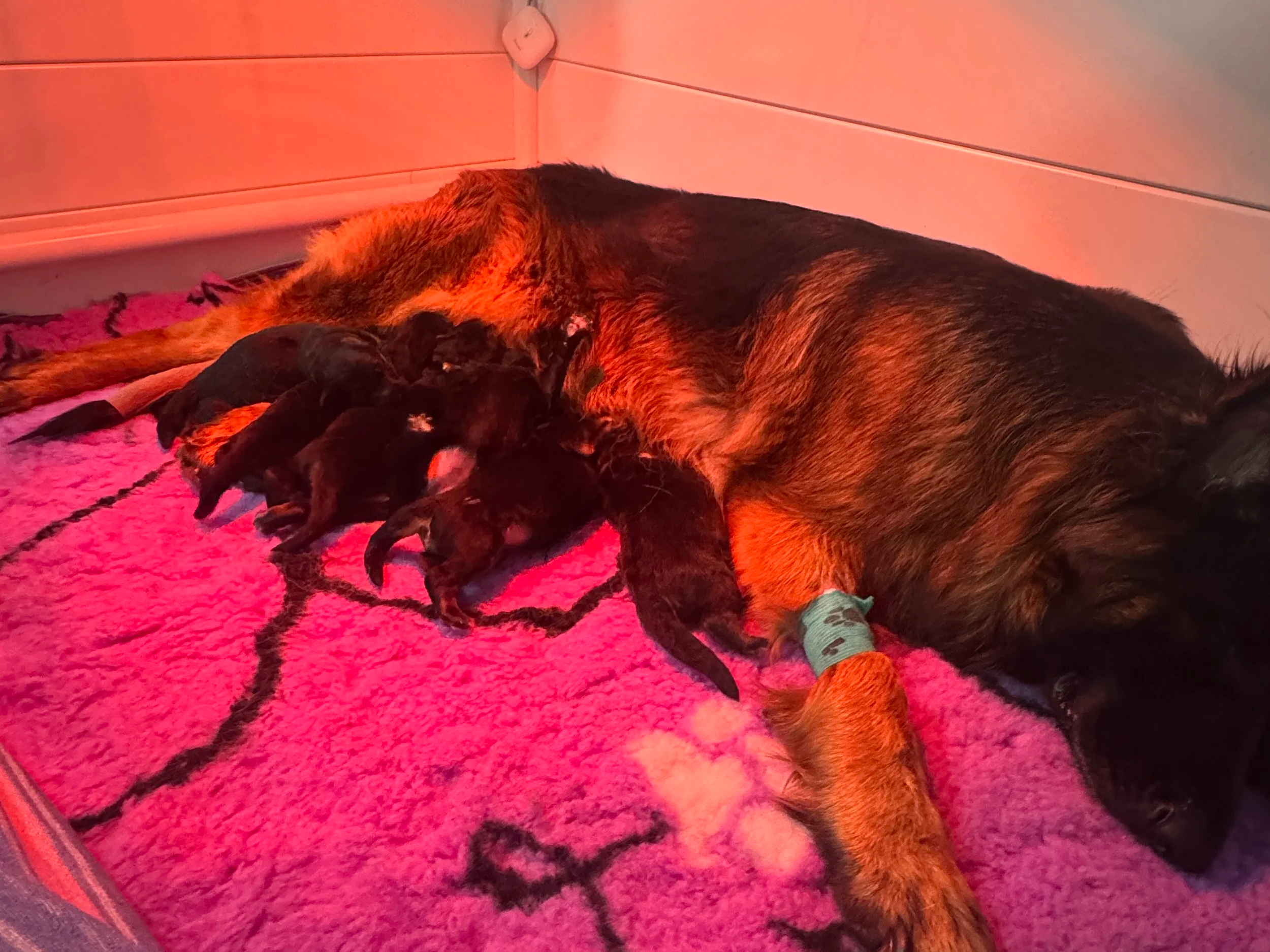
The first few days after a litter is born are usually quiet. It is meant to be that calm little bubble where you live on the floor, lose track of time, and just exist with mum and puppies. And for the most part, that is exactly what it was. Lots of tiny squeaks, warm bodies, feeding, sleeping, and me obsessively checking weights.
I keep my whelping area clean. Really clean. Bedding is changed constantly, surfaces are disinfected, hands are washed a million times a day. I do not cut corners when it comes to hygiene or post whelp care, and I did not this time either.
And yet, despite doing everything right, things still went sideways.
It did not take long for me to realise something was not sitting right with Maya. Nothing dramatic at first, just little things that, if you know your dog, set off alarm bells. She was not quite herself. Her appetite dipped. There was a smell that absolutely should not have been there. That sinking feeling in my gut kicked in hard.
Maya ended up with metritis.
We were back and forth to the vet multiple times, juggling antibiotics, monitoring her closely, and trying to support her through recovery while she was still raising newborn puppies. At one point, I was even told she would need to be desexed, something no breeder ever wants to hear in the days after a whelp.
What makes this particularly hard to swallow is that this situation was completely preventable.
We knew the litter count.
We knew exactly what to watch for.
We knew she had a retained placenta.
I was not whelping alone.
I had support.
All Maya needed was 1ml of oxytocin after the last puppy was born.
That was it.
I advocated hard for it. I explained the situation clearly. But my vet is over an hour away, and instead of trusting that I could administer it safely, I was told the only option was to drive an hour there and an hour back with a freshly whelped bitch and a litter of newborn puppies just to receive it.
That was never going to be the right call.
I was reassured that the retained placenta would pass on its own. It will be fine, they said.
It was not.
Instead, we ended up dealing with infection, stress, multiple vet visits, and the emotional toll that comes with watching a dog you love feel unwell when she should be resting and bonding with her babies.
Through all of it, Maya was incredible. Even while unwell, she never stopped being a devoted mother. She fed her puppies, cleaned them, checked them constantly, and stayed exactly where she needed to be with them.
Those first few days were exhausting, emotional, and honestly frustrating. They were a reminder that breeding does not always reward preparation the way it should, and that sometimes you can do everything right and still end up managing damage control.
But they were also a reminder of why knowing your dog matters. Why advocating matters. And why experience counts.
The puppies continued to thrive. Maya recovered with treatment. And while it was not the calm start I would have chosen, it reinforced something I already knew. Breeding is not about perfection. It is about responsibility, resilience, and doing the best you can with the information you have.
